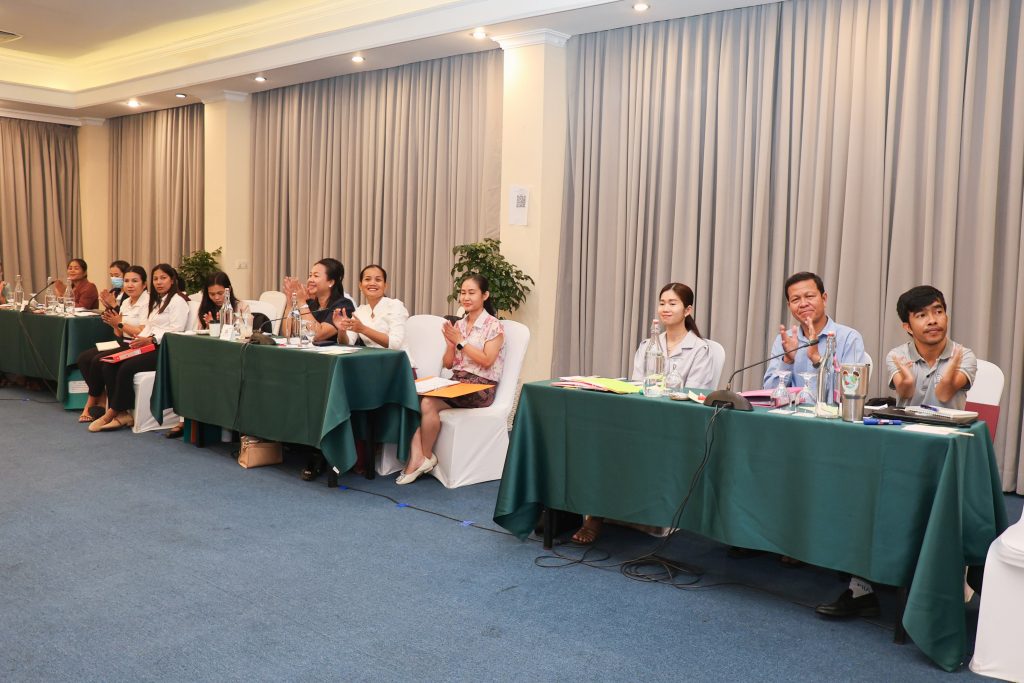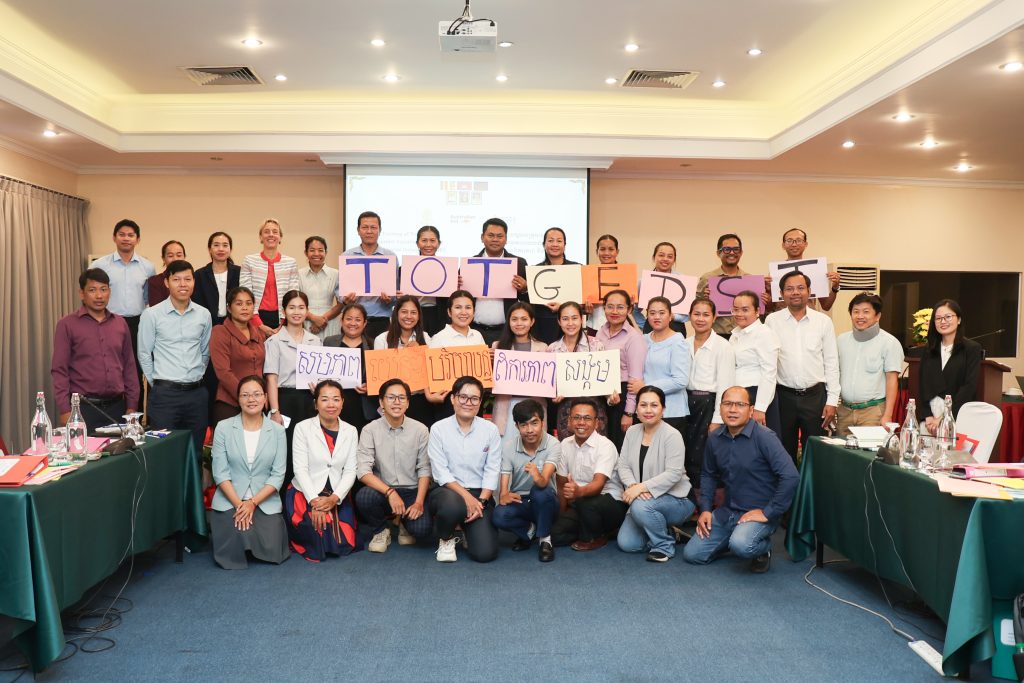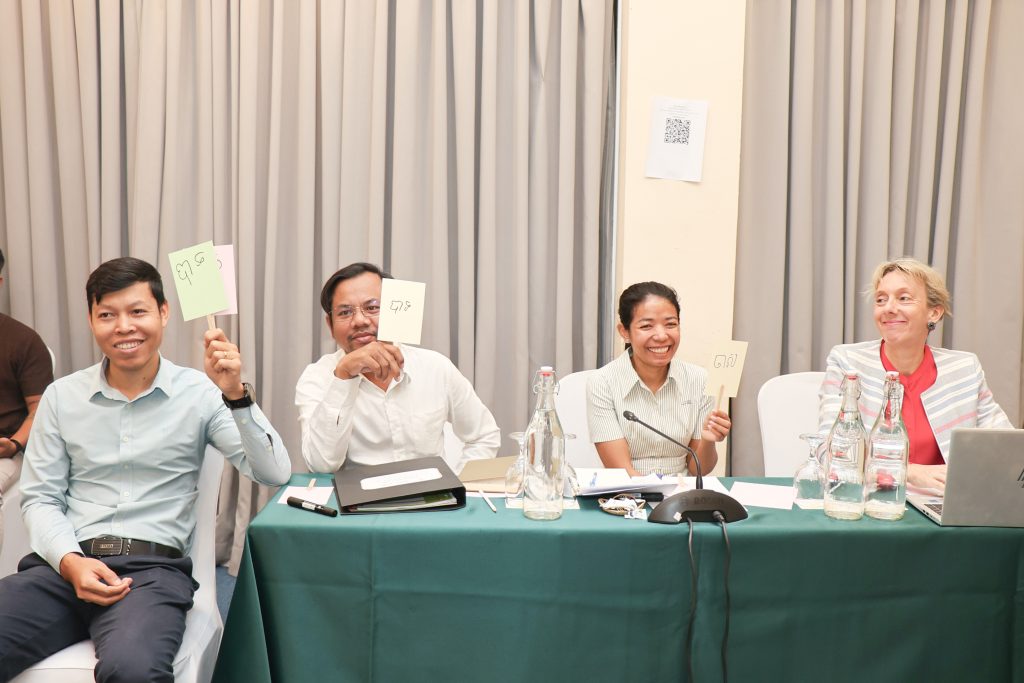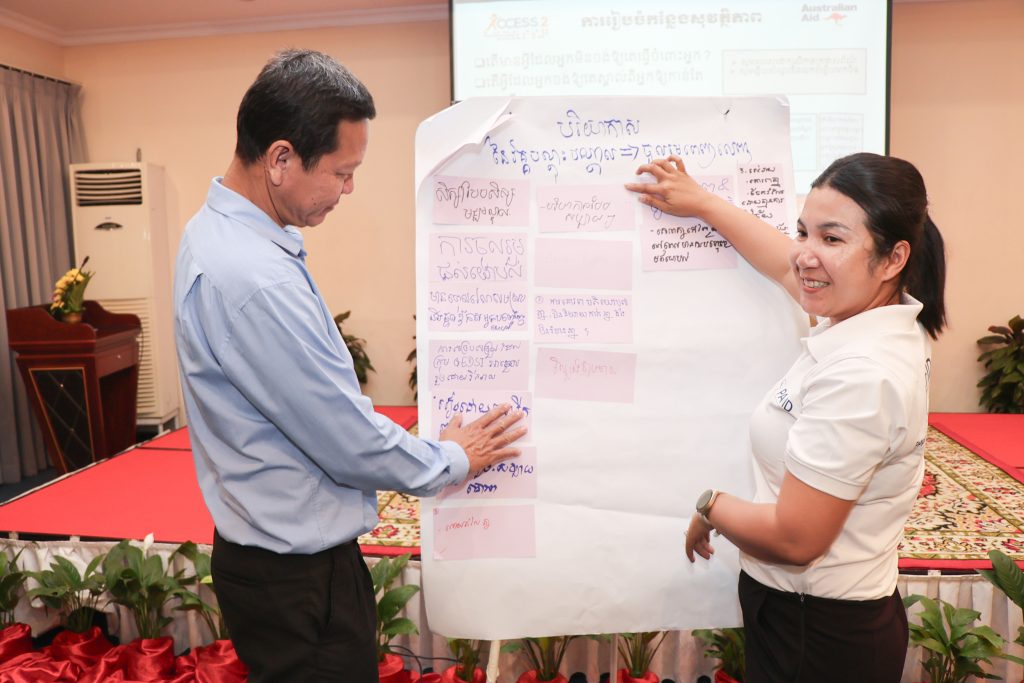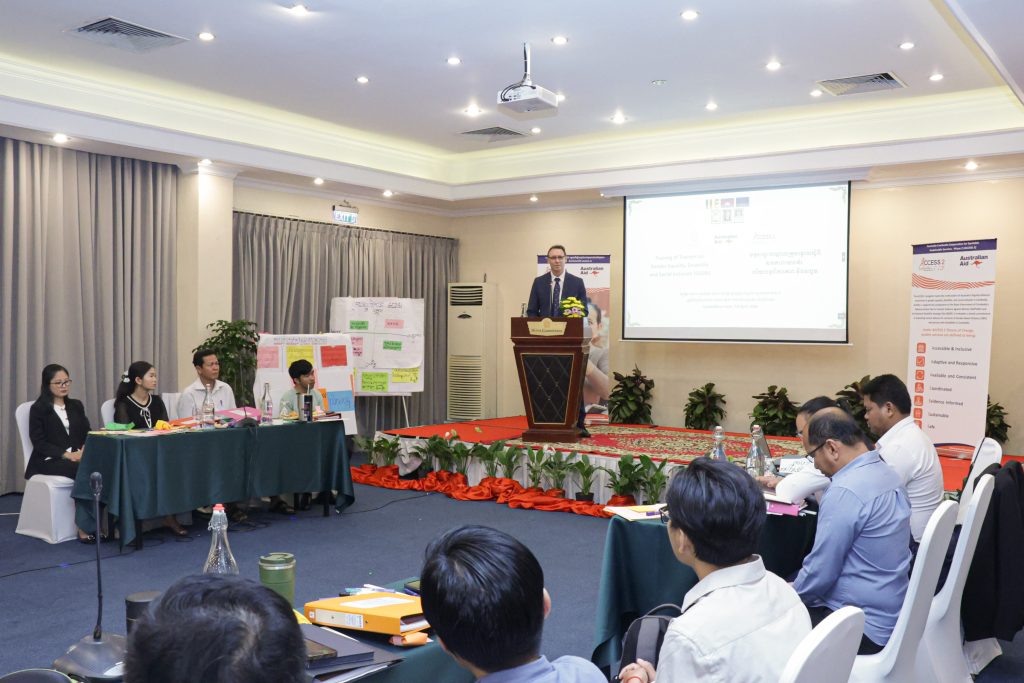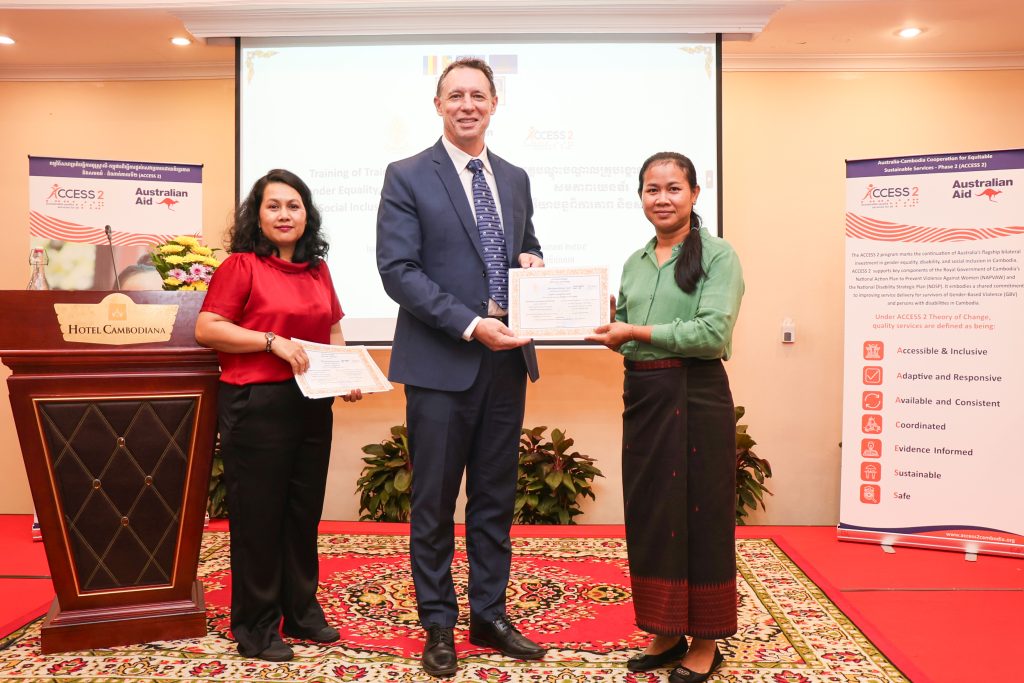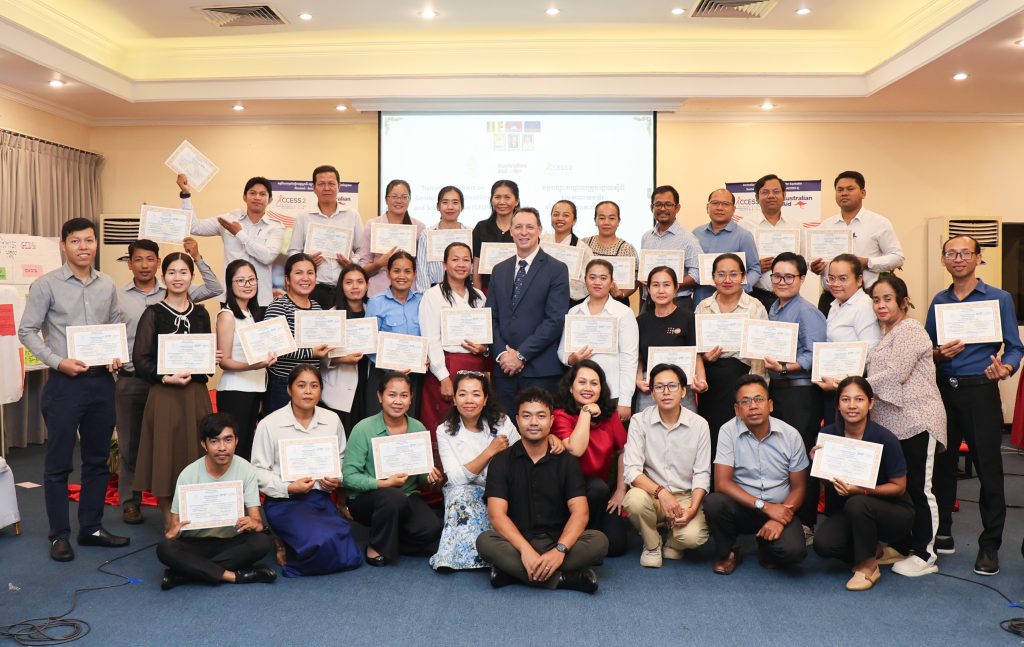
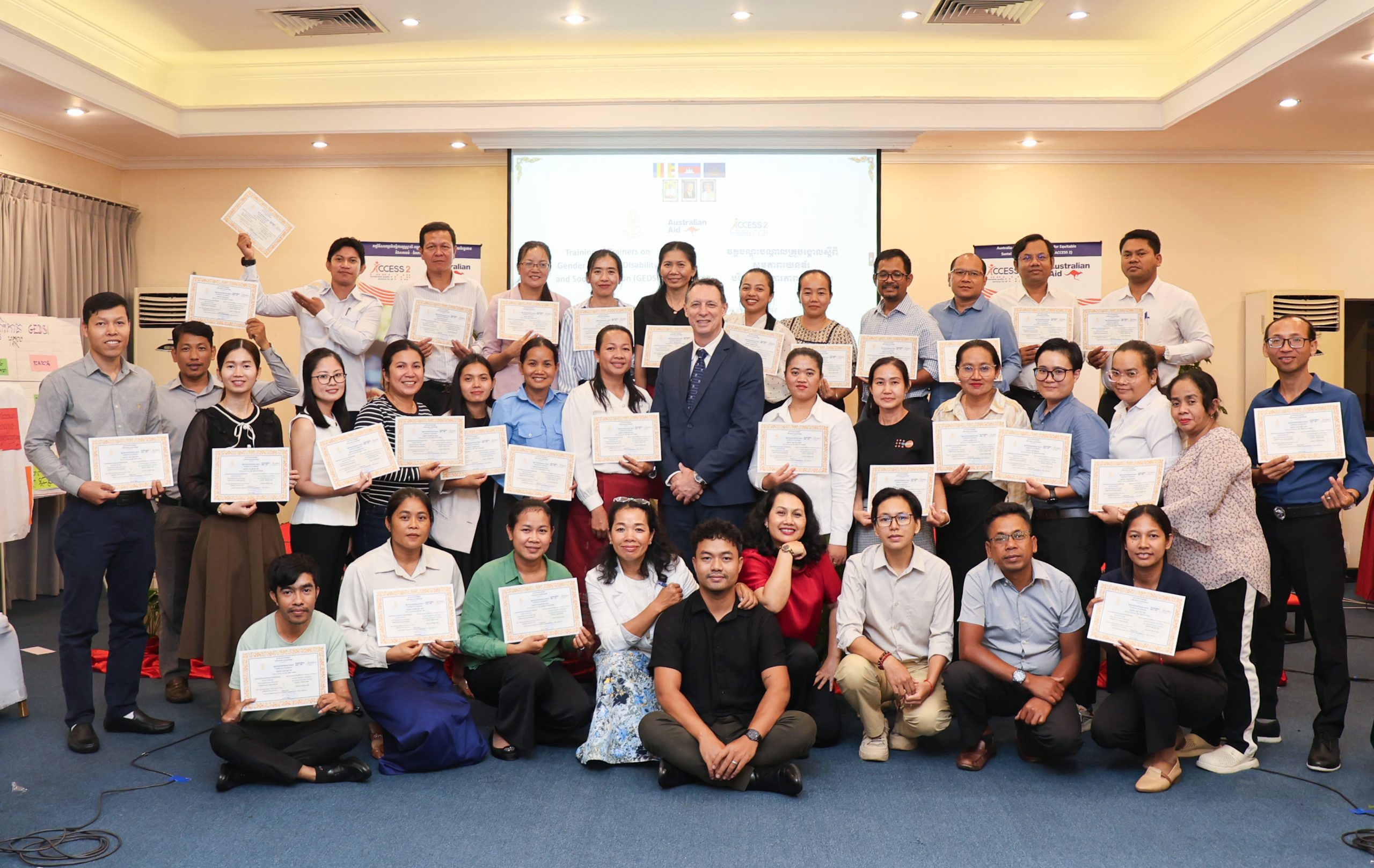
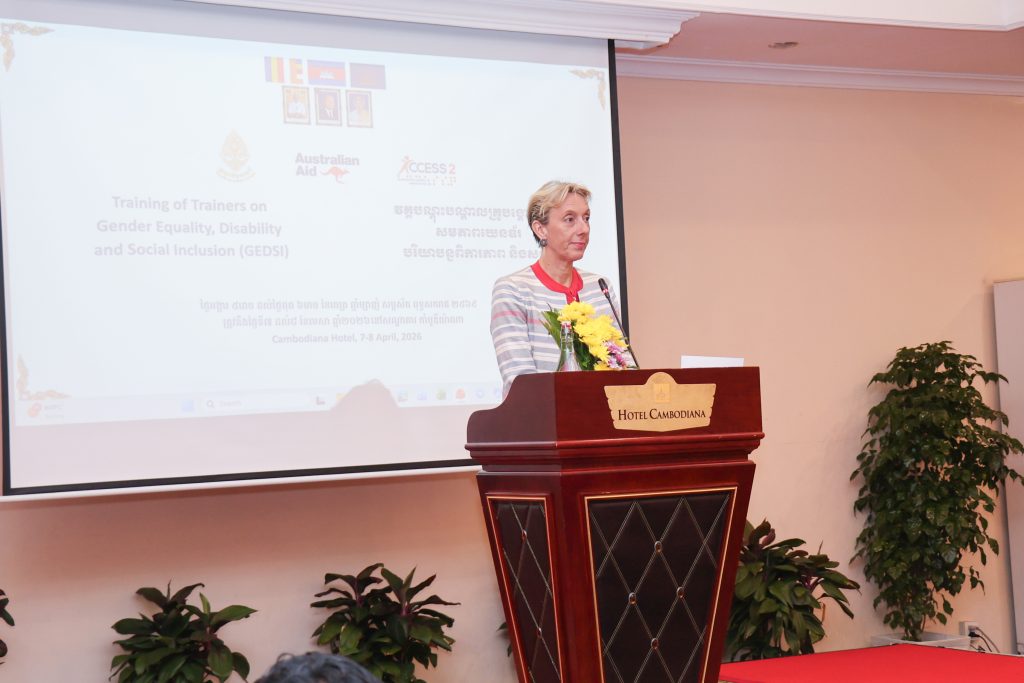
On 7 and 8 April 2026, the ACCESS 2 program, in collaboration with the Ministry of Women’s Affairs (MoWA), conducted a two-day Training of Trainers on Gender Equality, Disability, and Social Inclusion (GEDSI) in Phnom Penh. The training brought together master trainers from MoWA, Provincial Departments of Women’s Affairs (PDoWA), and Strategic Implementing Partners (SIPs), with the objective of deepening their understanding of GEDSI concepts, strengthening the practical integration of GEDSI into program activities, and enhancing facilitation skills using the GEDSI Training Manual.
Since 2024, ACCESS 2 has worked closely with MoWA to deliver a series of GEDSI-focused trainings at both national and sub-national levels. These sessions have engaged government counterparts and SIPs to address key needs and barriers faced by marginalised groups, including women with disabilities, Indigenous women, and LGBTQI+ people, particularly in the context of gender-based violence (GBV) prevention and service delivery.
 Feedback from earlier training highlighted the need for a structured and standardised approach that could be consistently delivered at provincial, district, and commune levels. In response, MoWA, supported by ACCESS 2, developed the GEDSI Training Manual, which provides practical guidance to help trainers deliver high-quality, inclusive, and participatory sessions.
Over the two days, master trainers actively engaged with the concepts and methods needed to work effectively with LGBTQI+ and Cham communities. Participants drew on their own experience to enrich the discussion and strengthen GEDSI sensitisation during activity implementation. Breakout sessions gave participants sufficient time to practise delivering content in line with the manual, supported by facilitation techniques designed to lift participant engagement and build confidence.
In her opening remarks, Ms Sophia Cason, ACCESS 2 Team Leader, emphasised the importance of the Training of Trainers on GEDSI for advancing inclusive, equitable, and responsive services for communities across Cambodia, particularly women affected by GBV, persons with disabilities, Indigenous communities, and LGBTQI+ individuals.
Mr Sasha Cigljarevic, Deputy Team Leader of ACCESS 2, in his closing remarks, highlighted that women, persons with disabilities, Indigenous people, and LGBTQI+ individuals are real people in real communities who rely on the quality and inclusiveness of the services delivered to them. He noted that the training reflects MoWA’s strong leadership and sustained commitment to advancing GEDSI across Cambodia’s social development agenda, and expressed sincere appreciation to MoWA facilitators, the ACCESS 2 GBV team, and the LGBTQI+ consultant for their dedication in delivering the training.
The Australian Government, through ACCESS 2, has supported this Training of Trainers and the broader GEDSI capacity strengthening agenda being led by MoWA, reflecting Australia’s ongoing commitment to inclusive and equitable development in Cambodia.