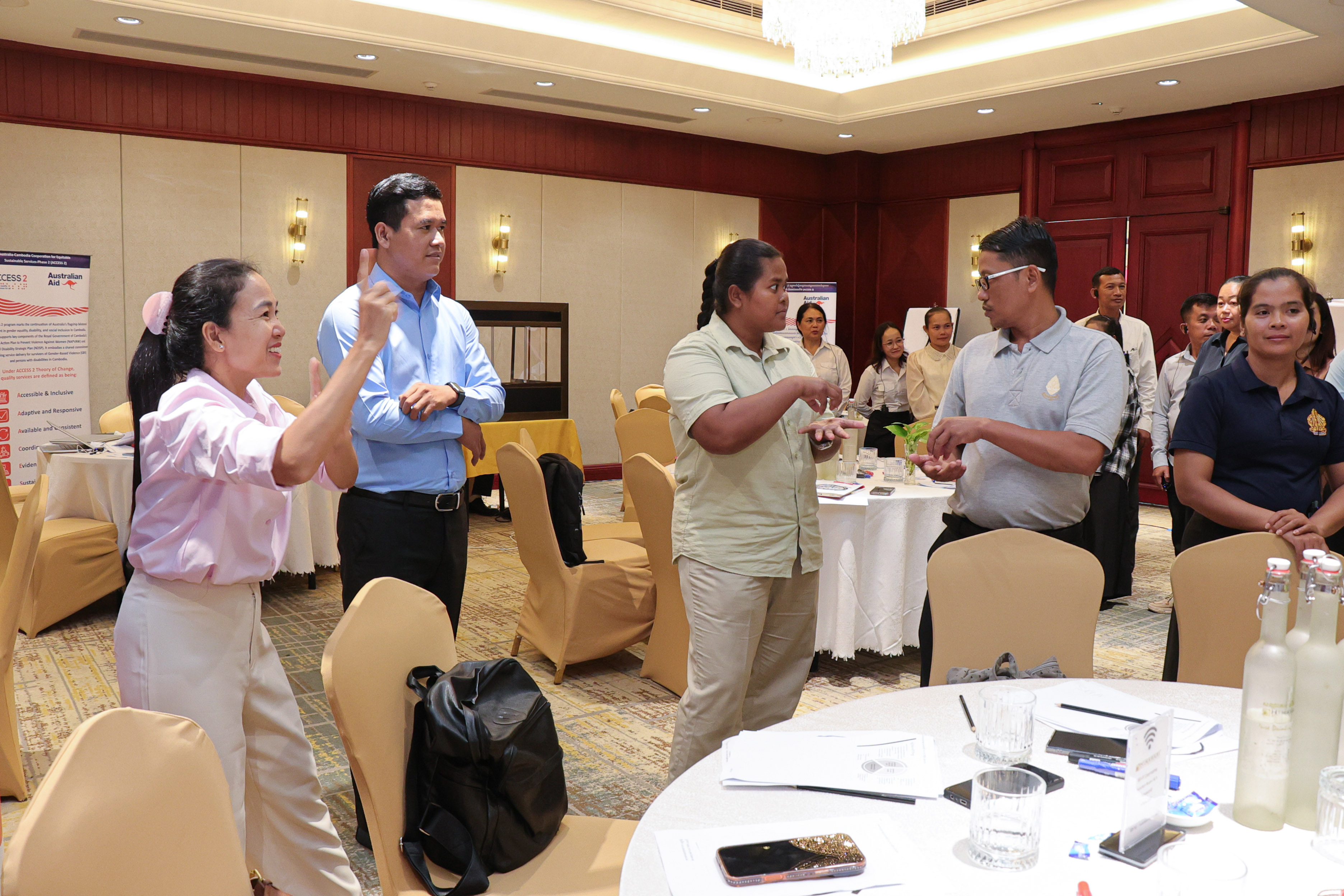
For survivors of gender-based violence (GBV), speaking about their experiences and seeking justice can be challenging. For women who are Deaf, have communication difficulties, or come from Indigenous communities, these barriers are often even greater, as accessing police, legal, and support services frequently requires qualified sign language or Indigenous language interpreters. However, access to trained interpreters remains limited, particularly in legal and support settings.
To address these challenges, the Australian Government is investing in interpreters and inclusive services to help women and girls, with and without disabilities, including those from Indigenous communities, access support, exercise their rights, and seek justice.
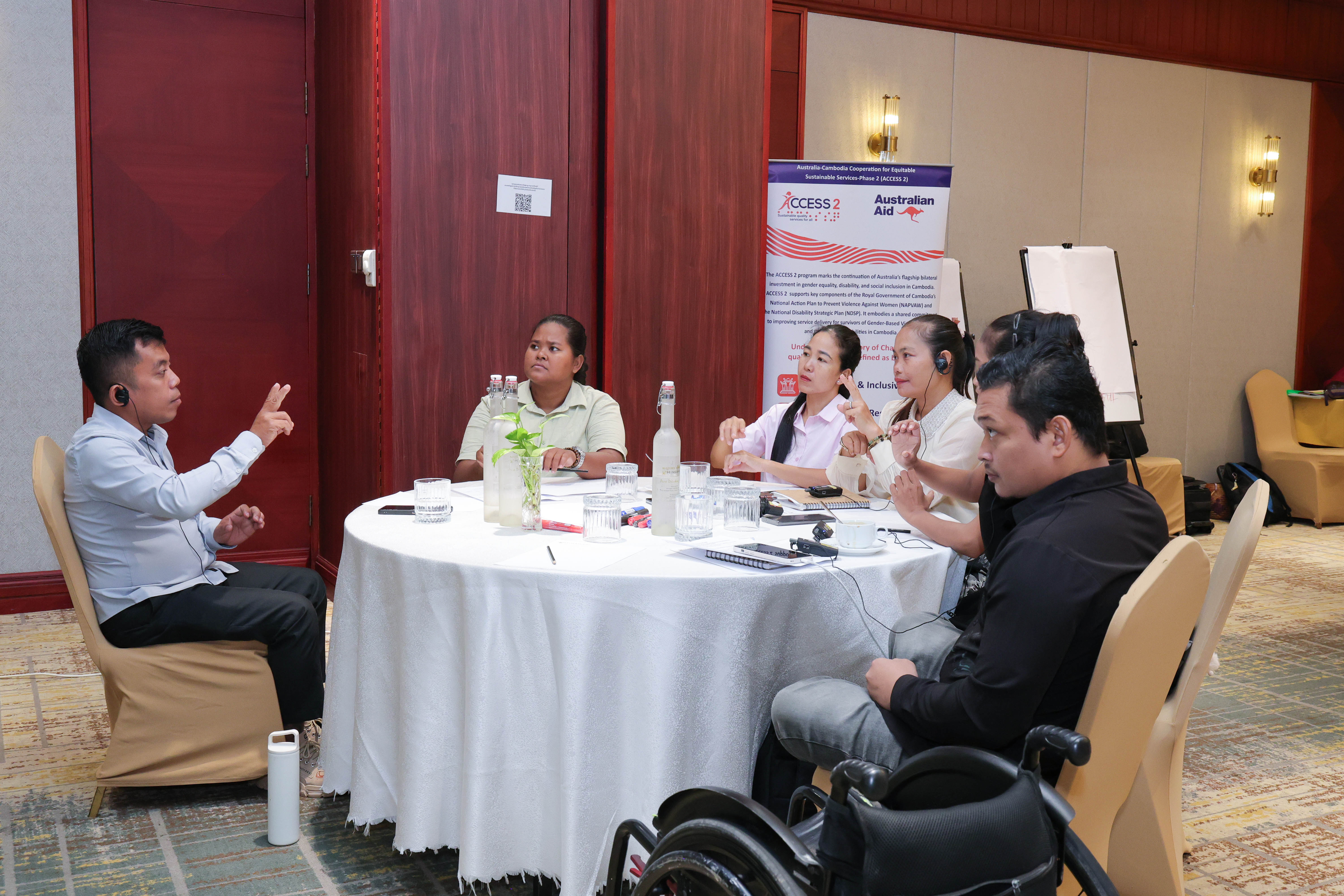
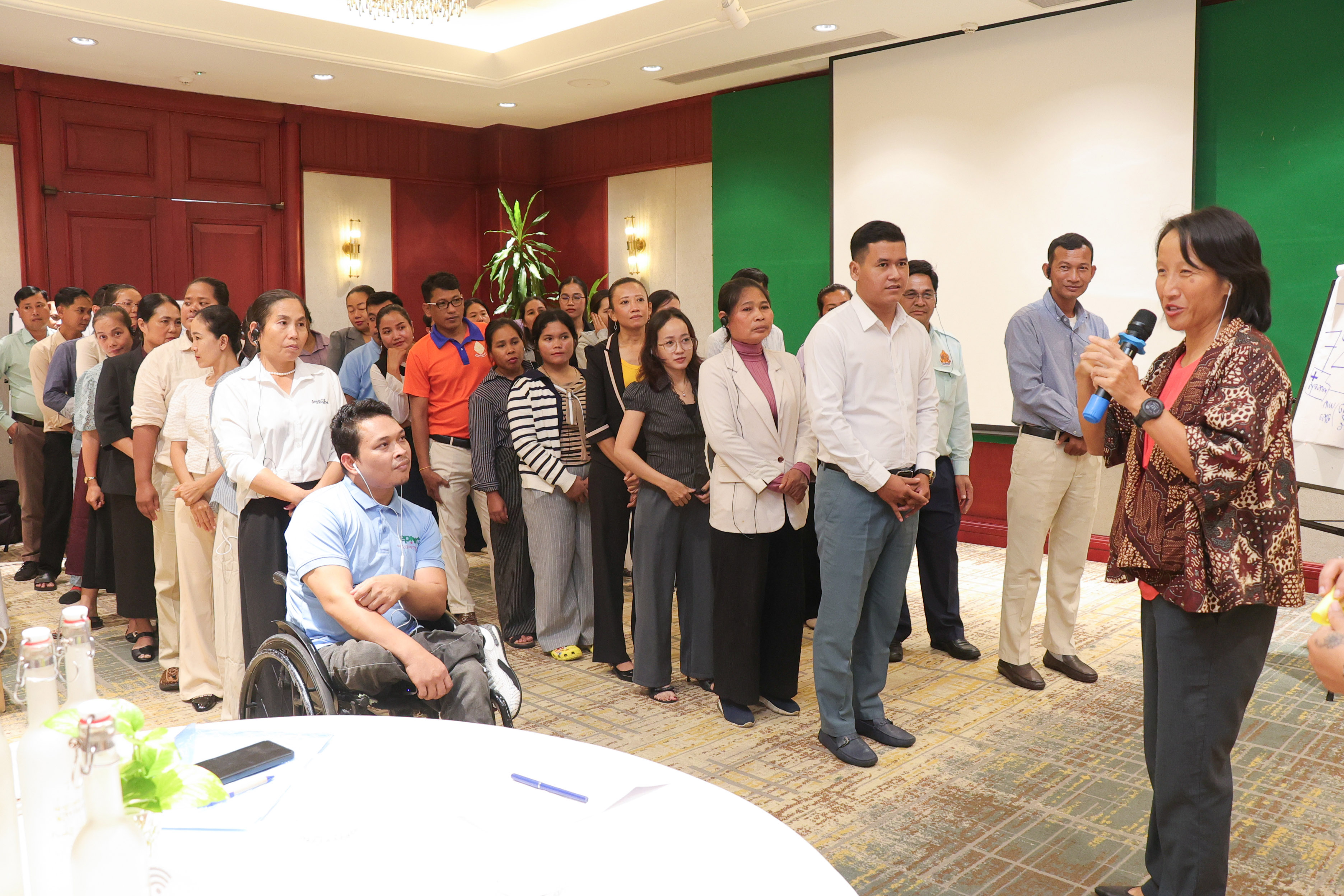
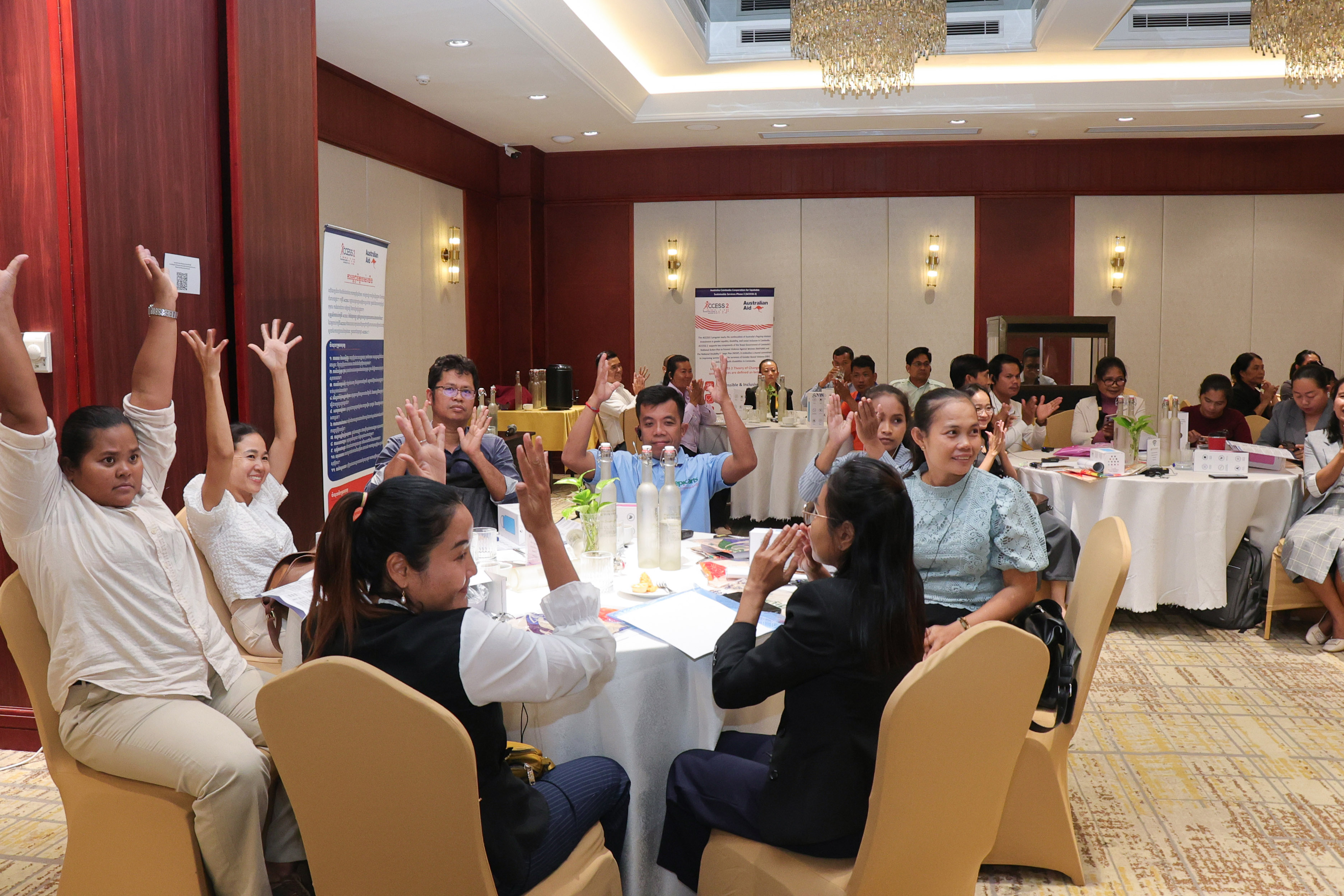
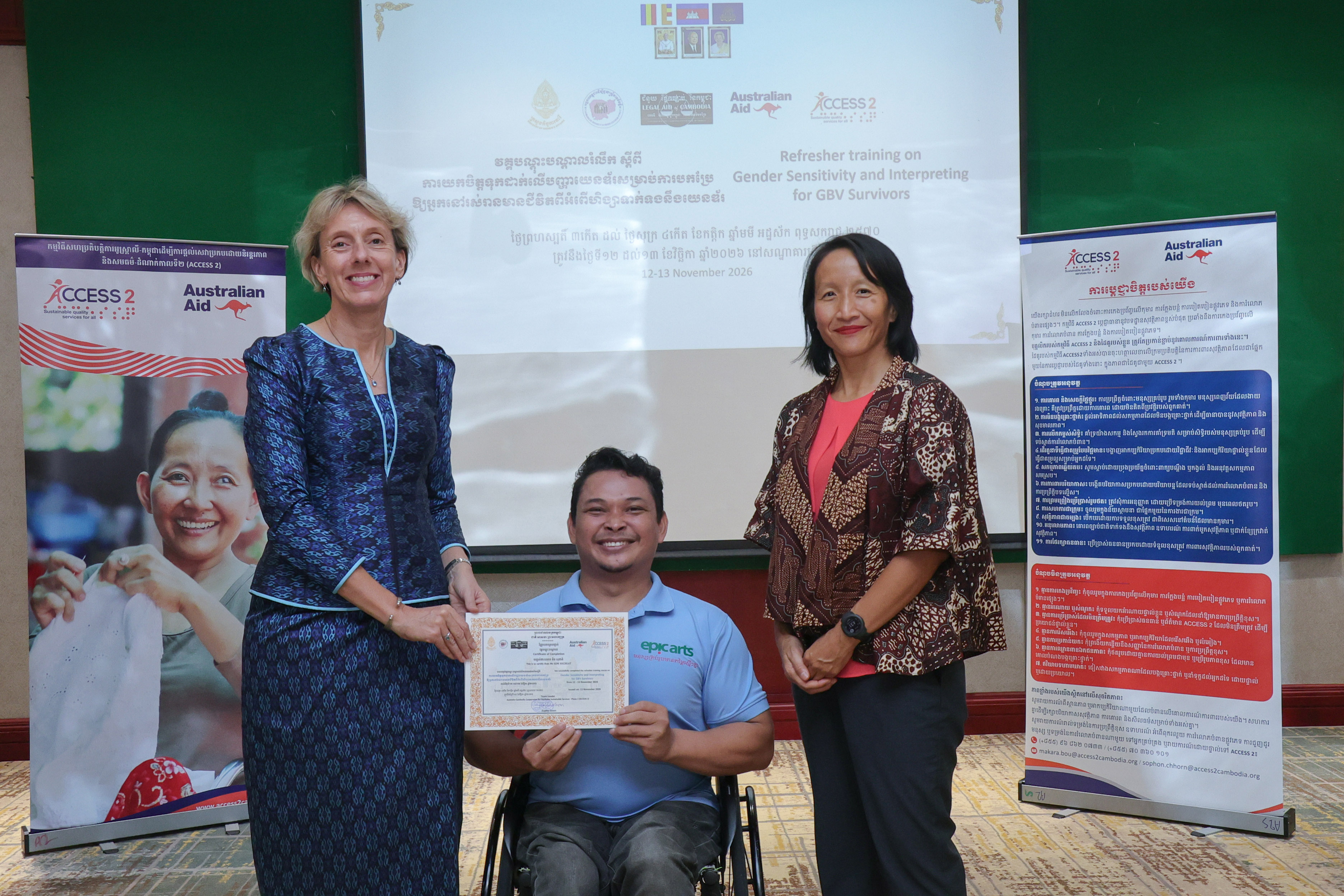
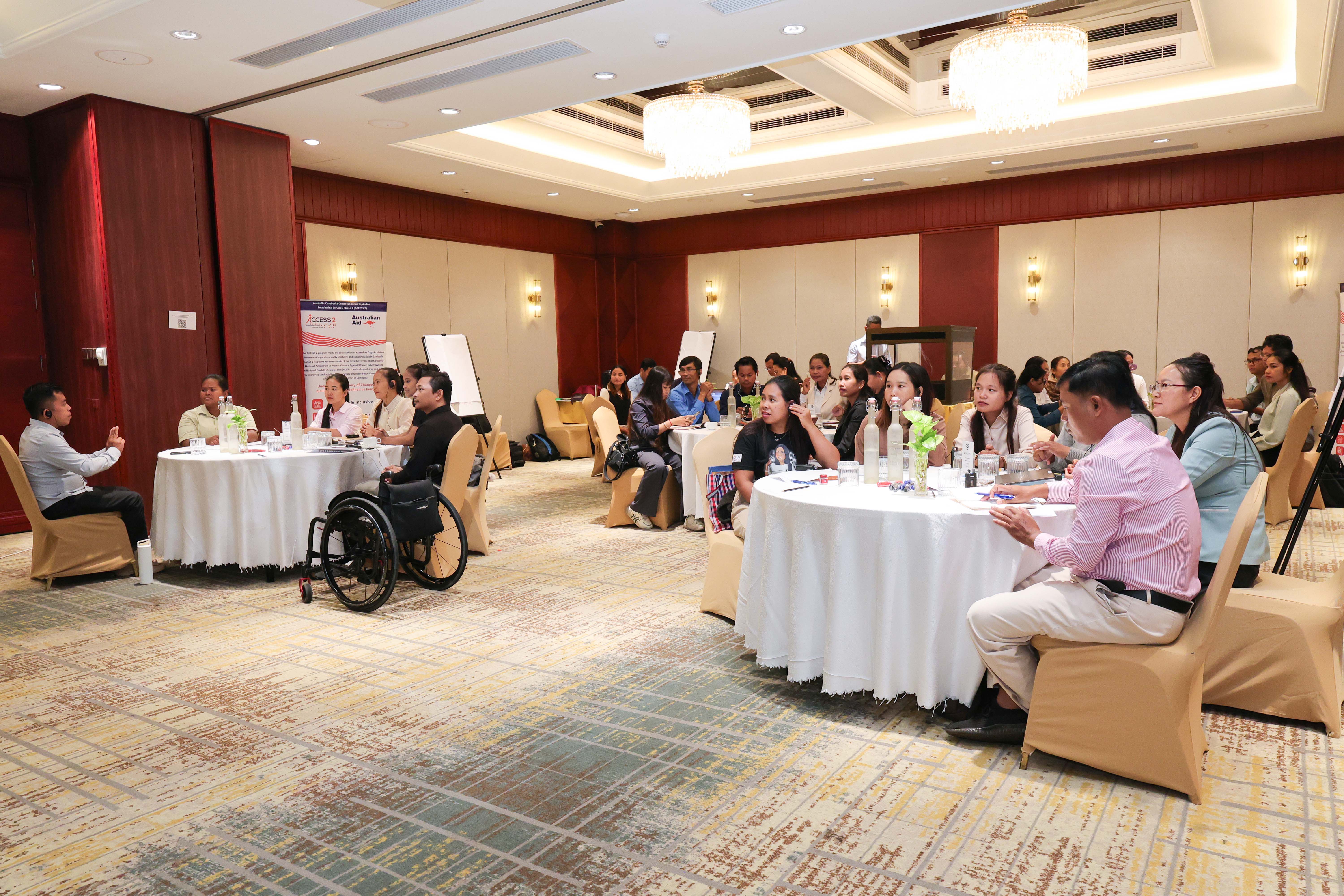
Recently, with Australian Government support, sign language and Indigenous language interpreters participated in specialised training on Gender Sensitivity and Interpreting for Gender-Based Violence Survivors. The training strengthened participants’ understanding of GBV, relevant laws and legal processes, and the important role interpreters play in helping survivors access information, protection, and services. It also enhanced their skills and confidence in applying survivor-centred, ethical, and professional interpretation practices in legal and support settings.
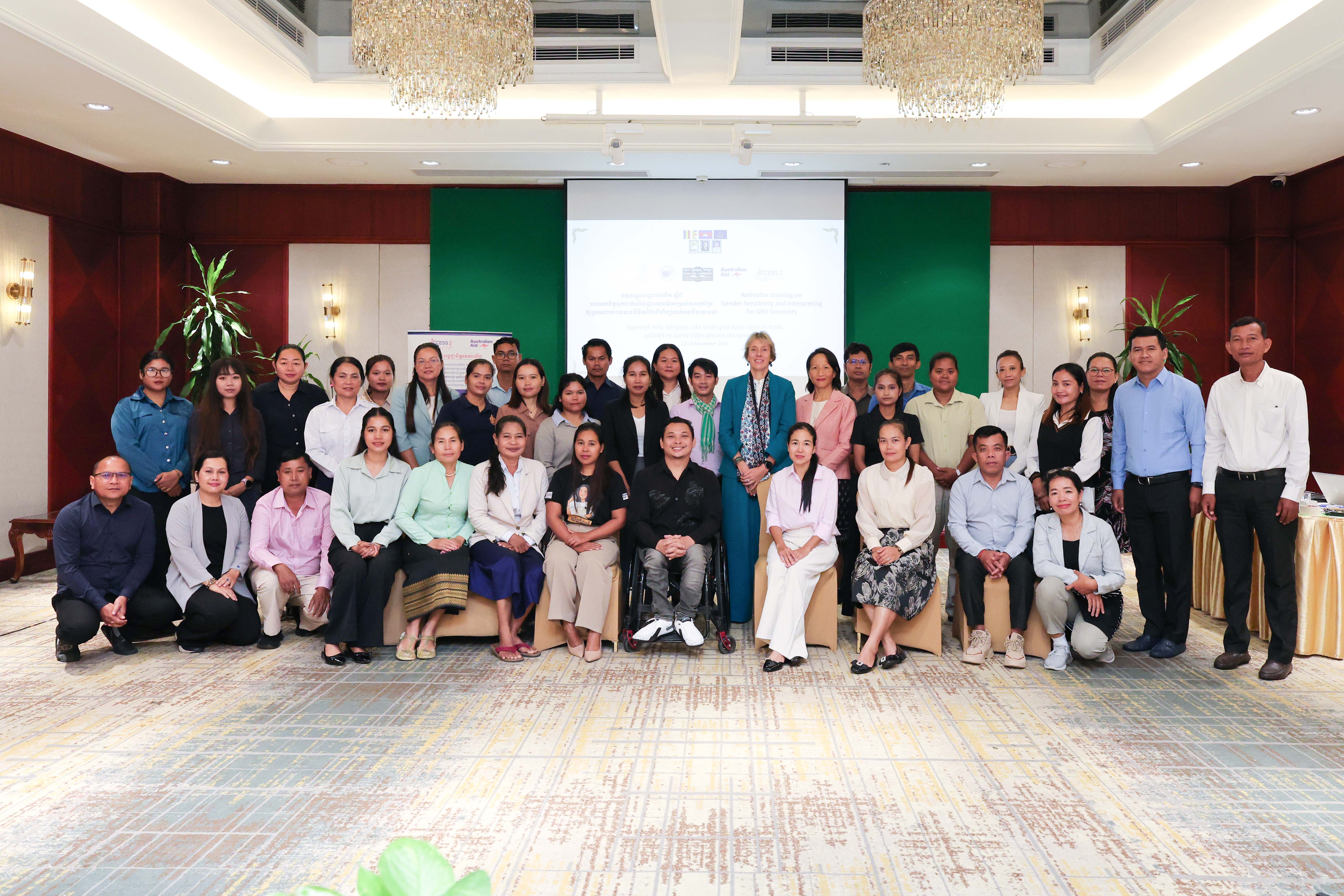
Bringing Together Key Stakeholders
The training brought together sign language and Indigenous language interpreters, government officials, and representatives from organisations involved in GBV prevention and response.
Participants deepened their understanding of gender dynamics, the various forms and impacts of GBV, and the specific needs of survivors, particularly those facing additional communication and accessibility barriers. They also strengthened their knowledge of Cambodian laws, legal processes, available services, and referral pathways for GBV survivors.
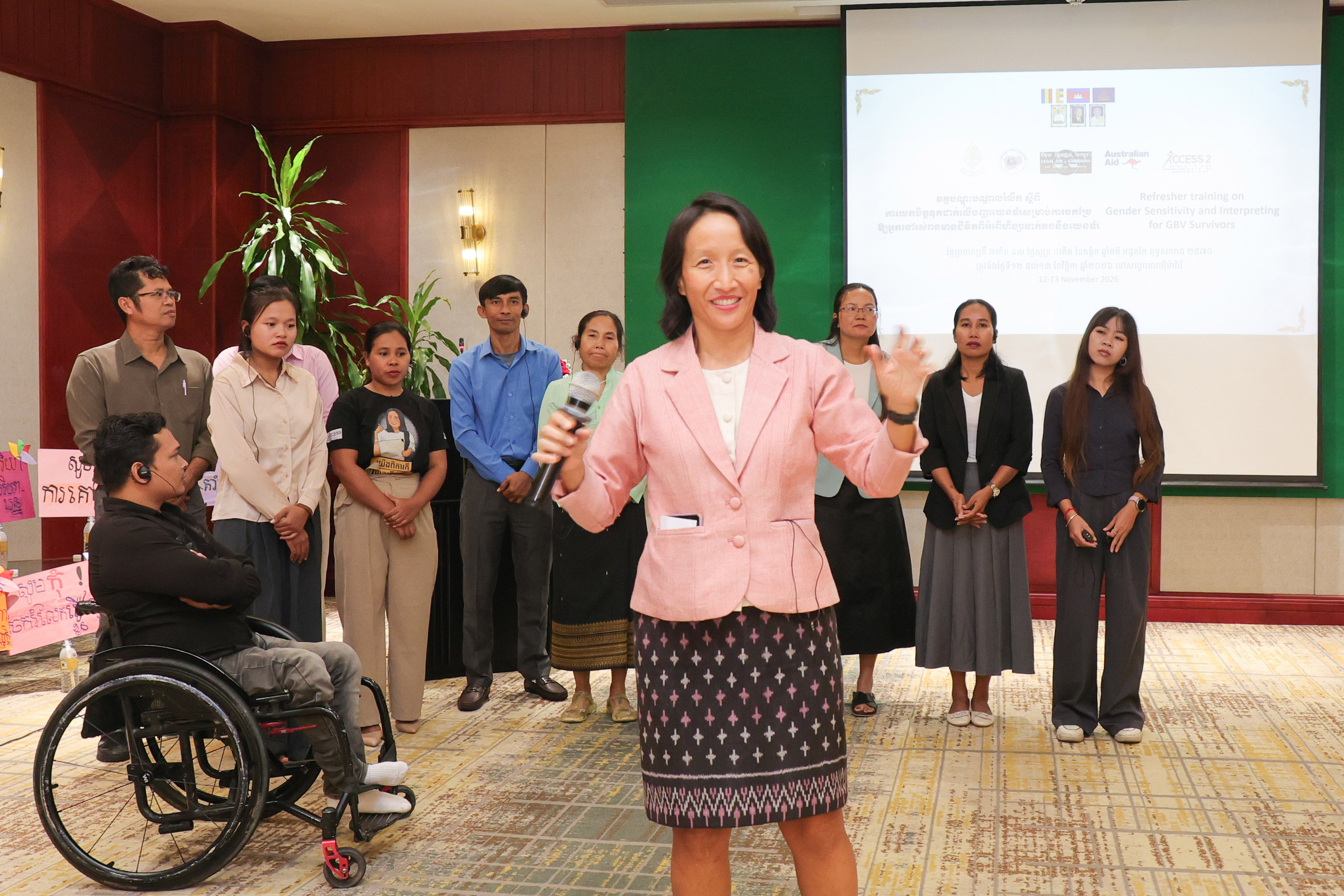
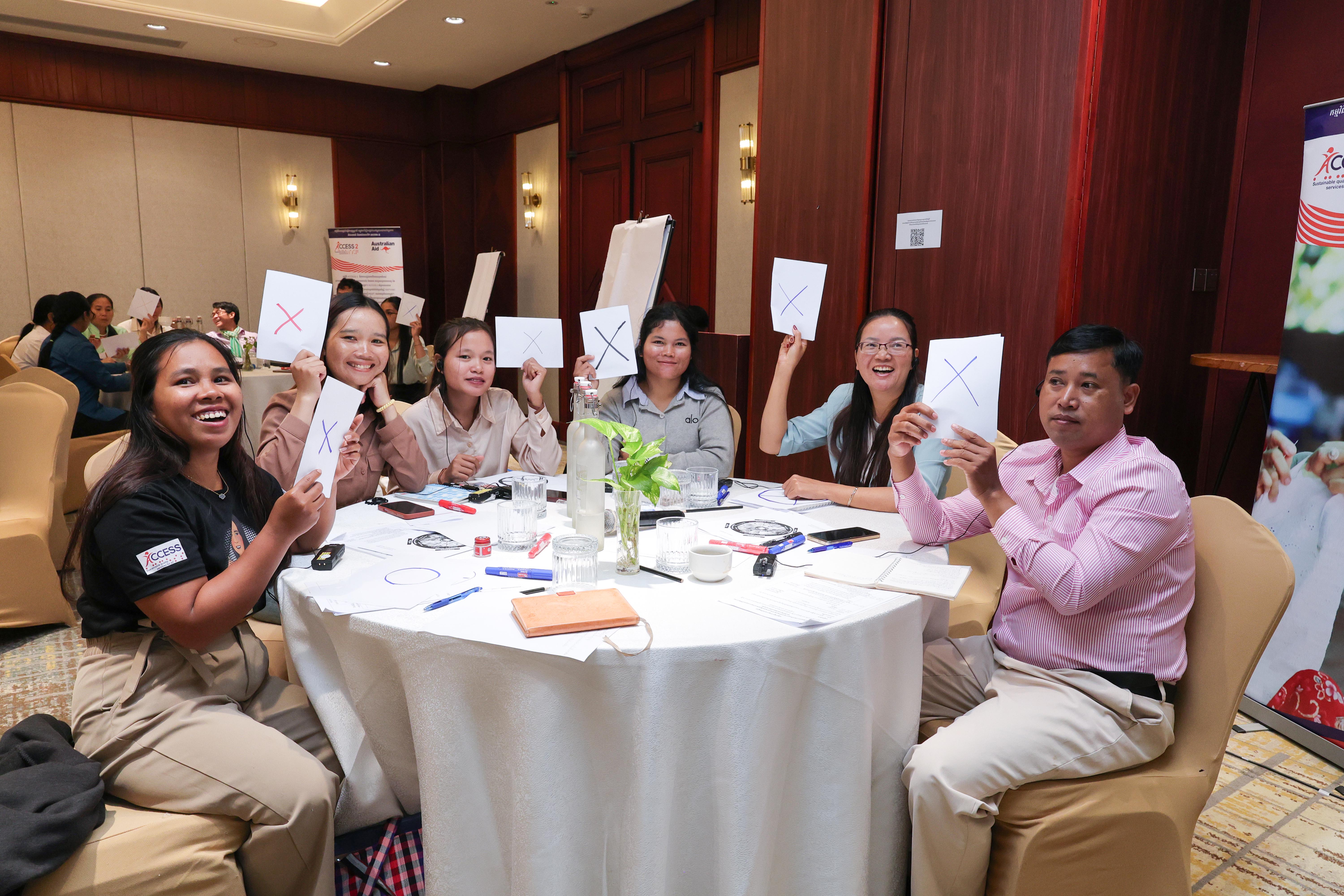
The program reinforced participants’ understanding of their professional roles and ethical responsibilities when interpreting for survivors. Through interactive discussions and practical exercises, participants explored good practices and identified ways to improve interpretation services and communication support for survivors throughout their journey to justice and recovery.
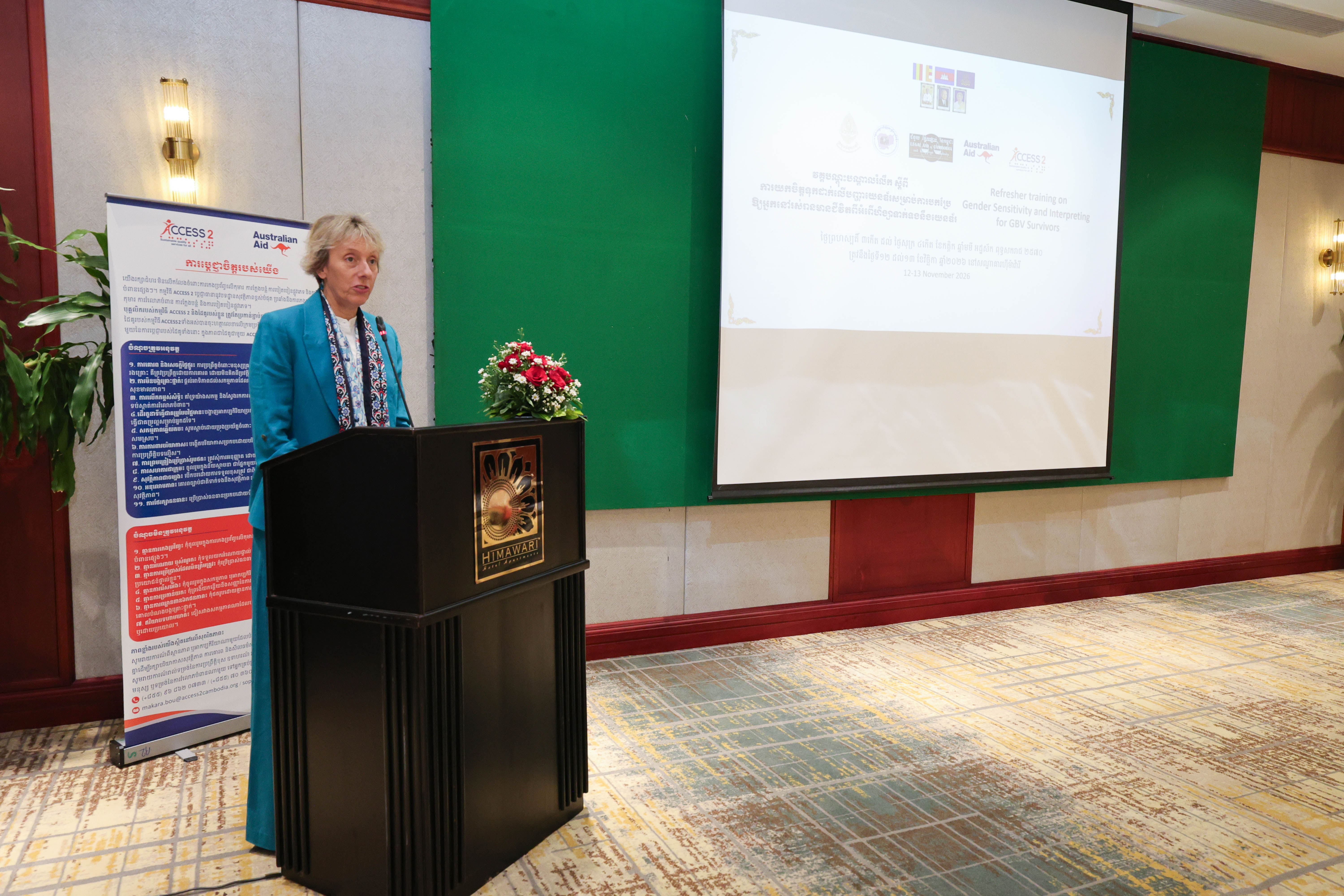
Ms Sophia Cason, ACCESS 2 Team Leader, highlighted the importance of strengthening the capacities of both interpreters and service providers. She noted that the training equipped participants with a deeper understanding of different forms of GBV, relevant laws and legal processes, available support services, and referral pathways. It also created valuable opportunities for participants to exchange experiences and identify practical ways to strengthen communication and coordination when supporting survivors.
Voices from Participants
Participants expressed strong appreciation for the training, noting that it enhanced their understanding of GBV-related laws and legal processes, as well as the professional ethics and responsibilities required of interpreters working with survivors.
Ms Khvin Moeun, a member of the Tumpuon Youth Volunteers Group from Ratanakiri Province, shared that the training provided her with valuable new knowledge and practical experience in interpreting for Indigenous communities.
“I am proud to participate in this training. This is my first time attending a professional event in Phnom Penh. The knowledge and experience I gained will help me strengthen my skills and better support GBV survivors in Ratanakiri.”
Mr Kim Socheat, a dancer and interpreter from Kampot Province, said the training broadened his understanding of professional interpretation and the barriers faced by Deaf people when seeking services and support.
“I learned more about the professional role of interpreters and gained a better understanding of the challenges that Deaf people face when accessing information and services.”
Building a More Inclusive Future
Through Australian Government support, interpreters and service providers are gaining the knowledge and skills needed to ensure that all survivors, regardless of disability, language, or background, can access quality services and justice.
This initiative reflects a shared commitment to building a more inclusive society where every survivor is heard, supported, and empowered to exercise their rights with dignity and confidence.