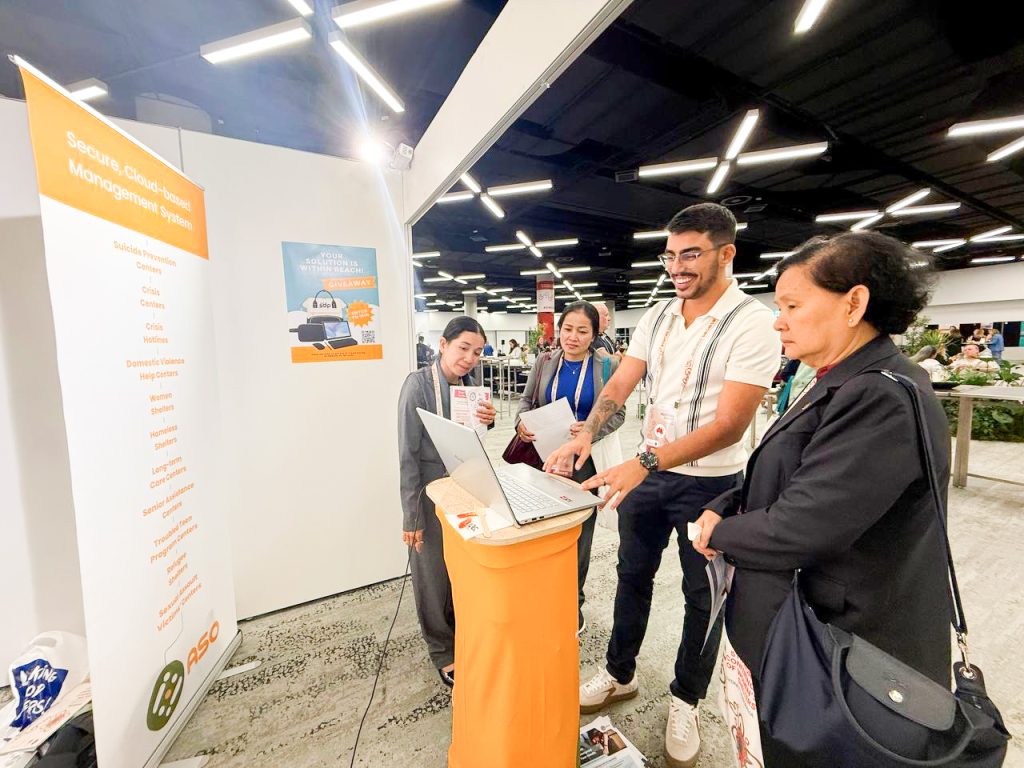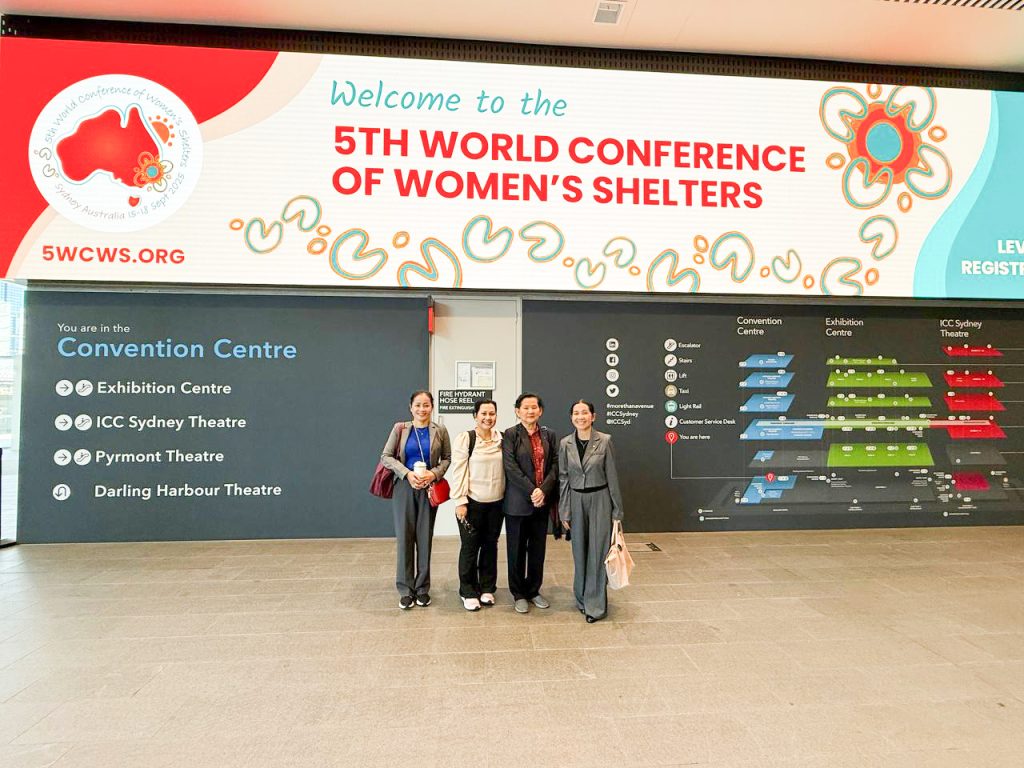
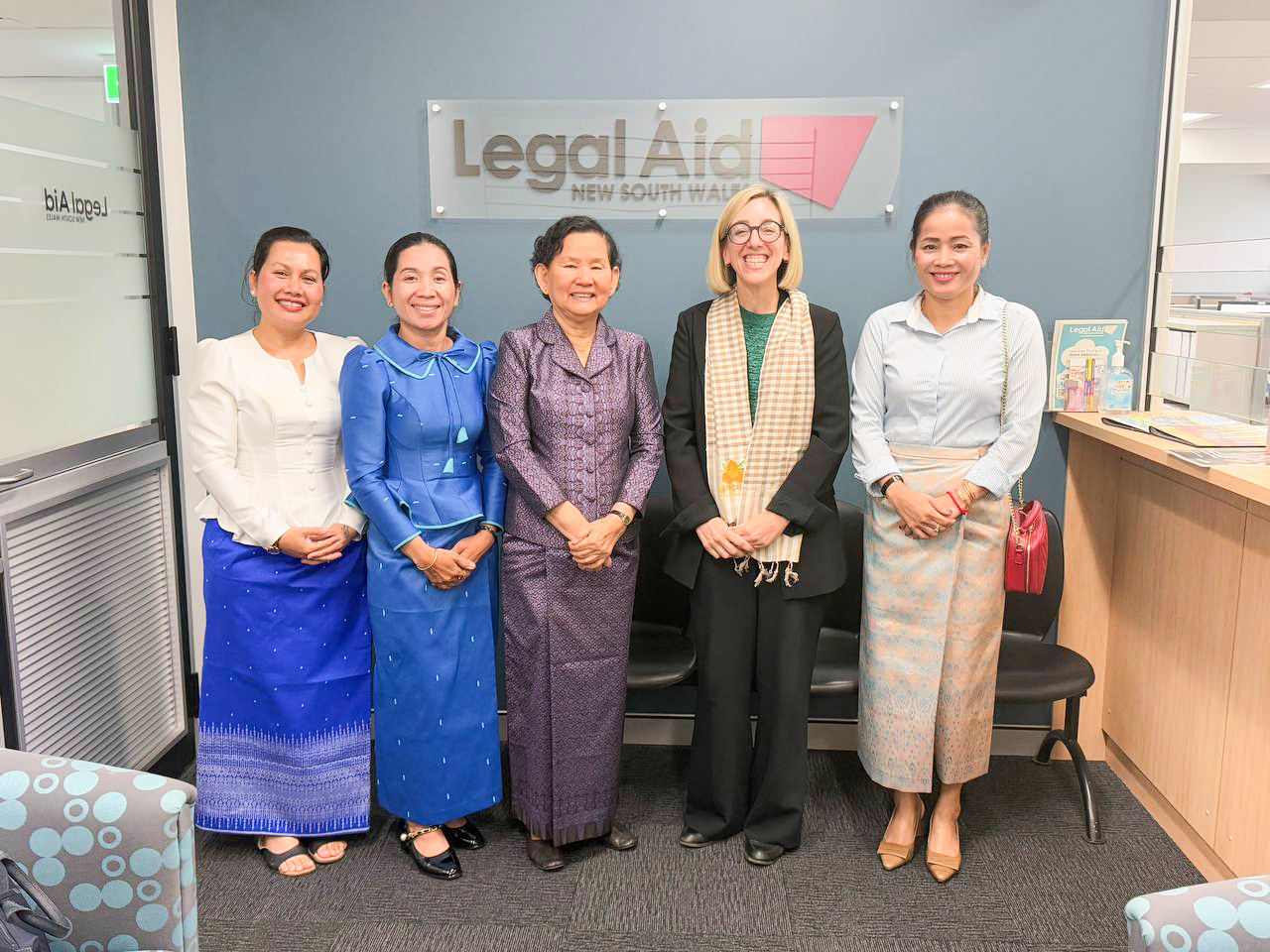
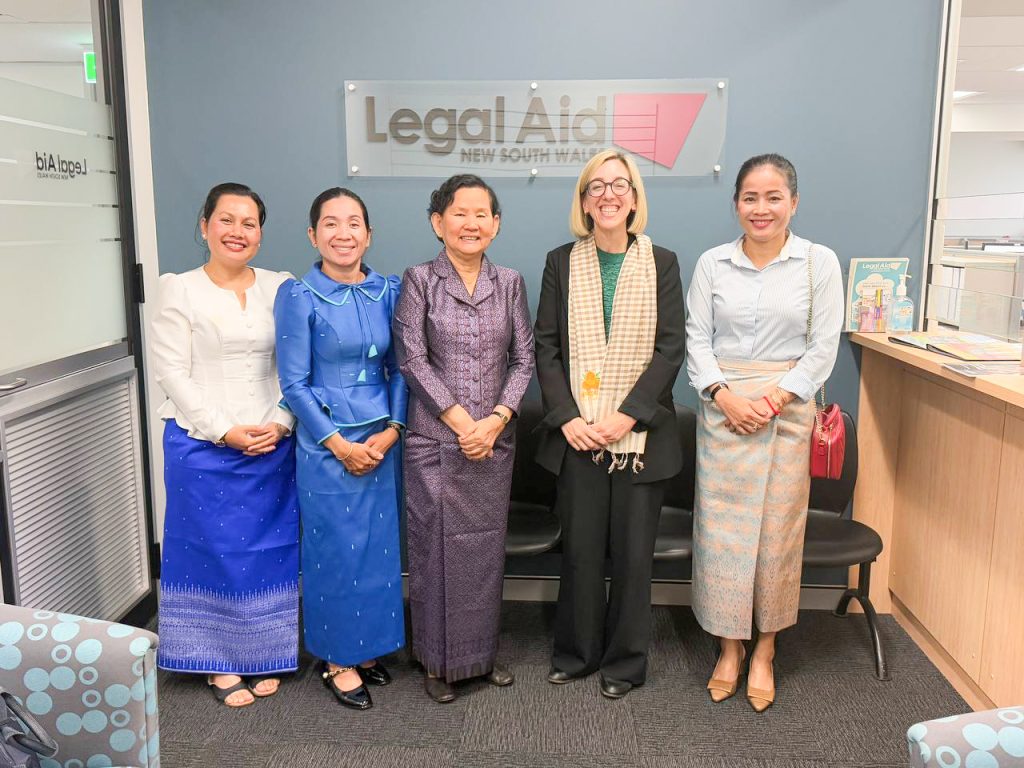
The Australia-Cambodia Cooperation for Equitable Sustainable Services – Phase 2 (ACCESS 2) program supported three senior-level officials from the Ministry of Women’s Affairs (MoWA) and one ACCESS 2 program staff to attend the 5th World Conference of Women’s Shelters (5WCWS) in Sydney from 15–19 September 2025. They participated in the conference, attended post-conference tours to women’s shelters, met with Women NSW and visited Legal Aid NSW to learn about government financing for gender-based violence (GBV) services.
The World Conference on Women’s Shelters is the world’s largest conference organised by and for women’s shelters and professionals working to end GBV. The 5th conference in Sydney focused on the theme “Connect, Challenge, and Change.” The main objective of the 5WCWS was to provide a platform for learning and sharing experiences. Delegates were able to build connections with regional networks and explore how government financing for safety and shelter services is possible.
Participation in this conference aligned with ACCESS 2’s goal of strengthening local capacity, fostering partnerships and ownership, building cross-regional collaboration, and delivering quality services. ACCESS 2’s participation aimed to achieve the following through the conference and field visits:
- Learn from global best practices and innovative strategies that apply a survivor-centred approach to program delivery.
- Build networks and collaborations within the region.
- Understand practical models of safe shelter operations through study tours.
- Accelerate knowledge sharing to improve ACCESS 2’s implementation of quality and inclusive services in Cambodia.
Key Learnings and Positive Outcomes:
Importance of Government-Funded Services:
As in most of the world, women’s shelters in Australia were originally established by dedicated feminist volunteers. They lobbied for government funding for these essential services for many years. Government funding in NSW has ensured the sustainability of shelters and legal aid services. The Cambodian government is exploring entry points to adopt structured, long-term funding mechanisms using national budgets to guarantee safe shelters and essential GBV services.
Comprehensive Support for Survivors:
As the delegates learned during their visits to women’s shelters and advocacy organisations in Sydney, effective GBV response integrates housing, healthcare, education, trauma recovery, and disability-inclusive services. Cambodia has implemented multi-sectoral coordination mechanisms in some provinces to address survivors’ diverse needs. However, safety planning and shelter services still rely heavily on external donor funding. It is essential that the government start funding these services as donor funding ends.
Digital Solutions and Data Safety Integration:
At the Conference delegates learned how technology is increasingly used for case management, survivor support, and data collection, with careful attention to confidentiality and sensitive information. MoWA is considering allocating government budgets to develop secure, standardized digital platforms and tools to enhance monitoring, strengthen data storage, and improve reporting systems.
Engaging Lived Experience Groups:
Survivor-led initiatives play a critical role in shaping policy and service delivery. MoWA should consider establishing similar groups to inform GBV program design and contribute to policy development and law reform.
Evidence-Based Planning and Budget Advocacy:
Data-driven approaches to GBV response rely on robust collection and reporting systems to demonstrate the need for service delivery and legal aid support. MoWA continues to strengthen its GBV data systems for accurate tracking and progress measurement. This evidence will be critical for advocating innovative strategies, including government-funded safe shelters for survivors in Cambodia.
Engagement with the Asian Network of Women’s Shelters (ANWS):
ANWS is a regional platform dedicated to strengthening shelter services and survivor-centred approaches across Asia. Networking with ANWS would open pathways for Cambodia to adopt regional standards, participate in joint initiatives, and access technical expertise to strengthen national GBV response systems.
Reflections from the Conference
Ms Rath Kalyan, Strategic Partner Liaison – GBV:
“Joining 5WCWS was an incredible opportunity to represent ACCESS 2 and the Cambodian delegation on a global platform. This experience allowed me to learn meaningfully from diverse perspectives. I had the chance to connect with people across the region and the globe who share the same goal. I believe this will enhance our ability to deliver impactful and sustainable results for the program.”
H.E Hou Samith, Secretary of State, MoWA:
“The conference gave me a big picture of why we need to do more to ensure women have a safe place to stay when they need it most. Therefore, we must focus on what we can do to make comprehensive services available for them.
Funding shelters right now is challenging for Cambodia, but this conference gives us hope that we can sustain safe spaces for survivors—starting by building evidence without being influenced by political considerations.”
ACCESS 2’s Mission and Next Steps
ACCESS 2 remains committed to improving access to quality, inclusive services for persons with disabilities and survivors of GBV in Cambodia. Aligned with the Royal Government’s priorities, ACCESS 2 will continue leveraging learnings and expanding its impact.
Next Steps Include:
- Advancing GBV Data Systems: Reinforce the importance of strong data for planning, accountability, and advocacy. This supports ACCESS 2’s ongoing work to improve GBV service monitoring and data collection, analysis, and evidence-based use.
- Strengthening collaboration with regional networks for knowledge sharing and joint initiatives.
- Continuing to build the capacity of SIPs and team members to sustain long-term impact for GBV survivors.