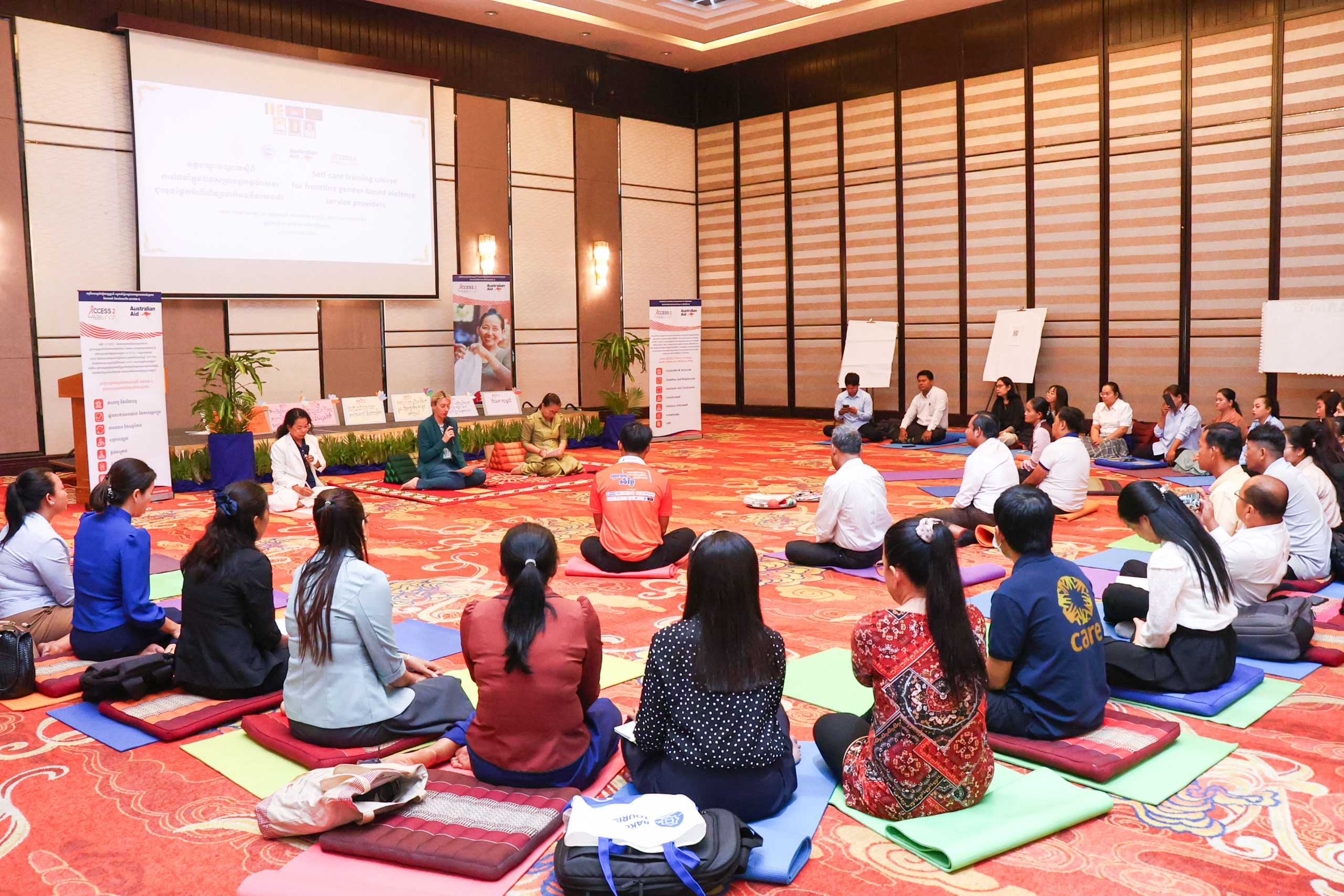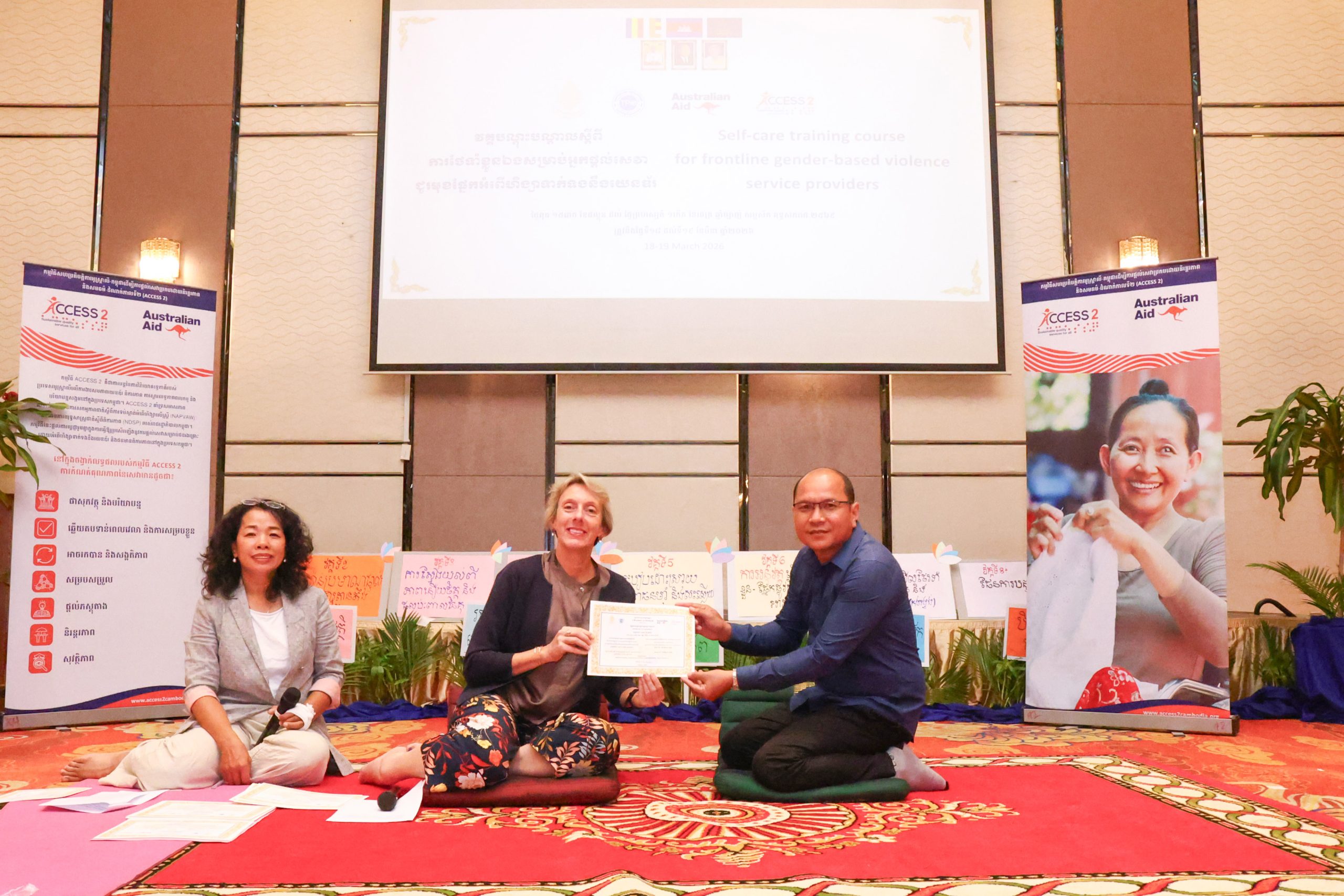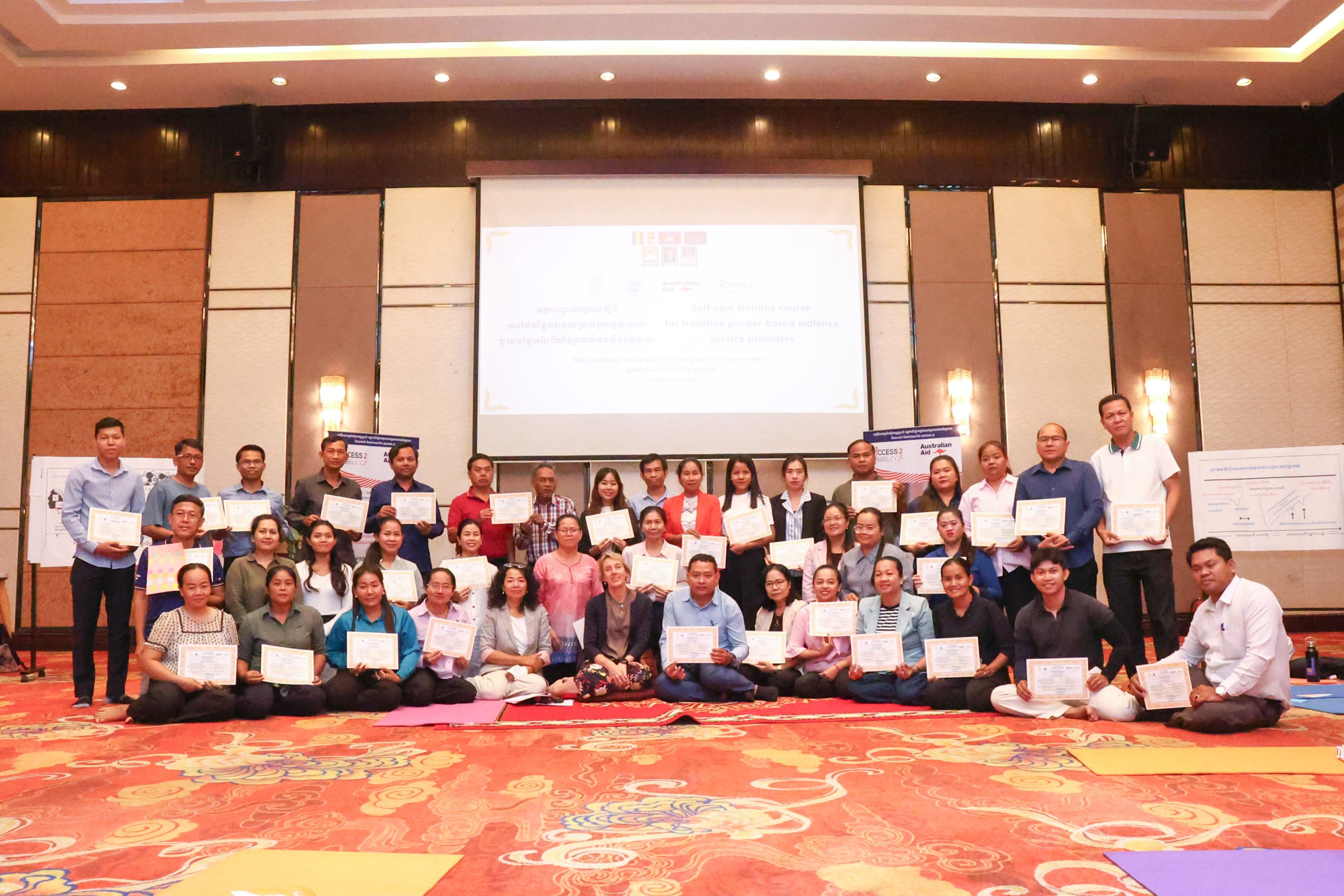
On 18–19 March 2025, the ACCESS 2 program delivered a Self‑Care Training Course for frontline service providers. Participants included representatives from the Ministry of Women’s Affairs (MoWA), Provincial Departments of Women’s Affairs in ACCESS 2 target provinces, and Strategic Implementing Partners (SIPs) supporting survivors of gender‑based violence (GBV) and women with disabilities.
Strengthening self‑care contributes to ACCESS 2’s end of investment outcome to improve the quality and sustainability of GBV services delivery. Prioritising the wellbeing of service providers is both a duty of care and a critical investment in long‑term program impact.
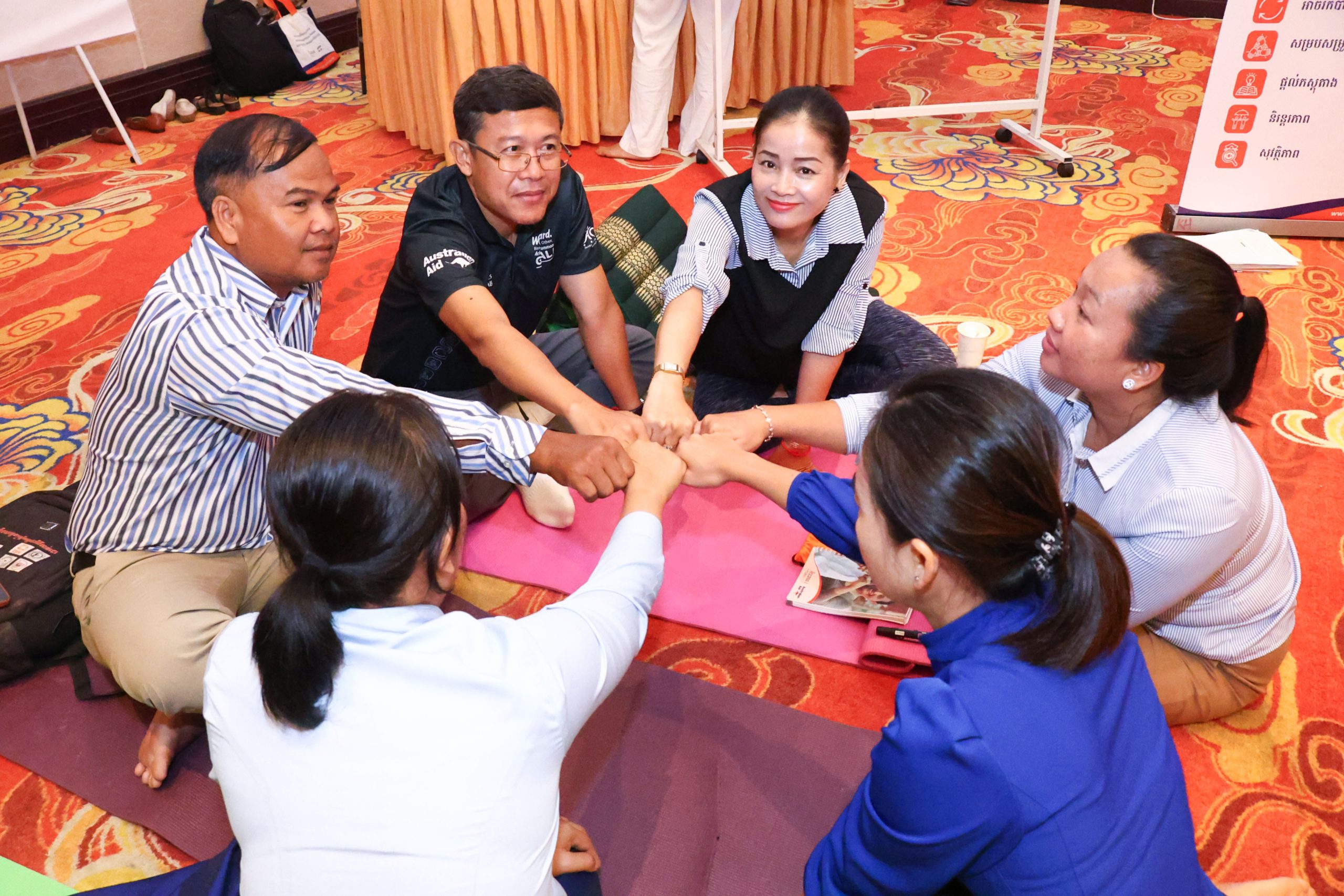
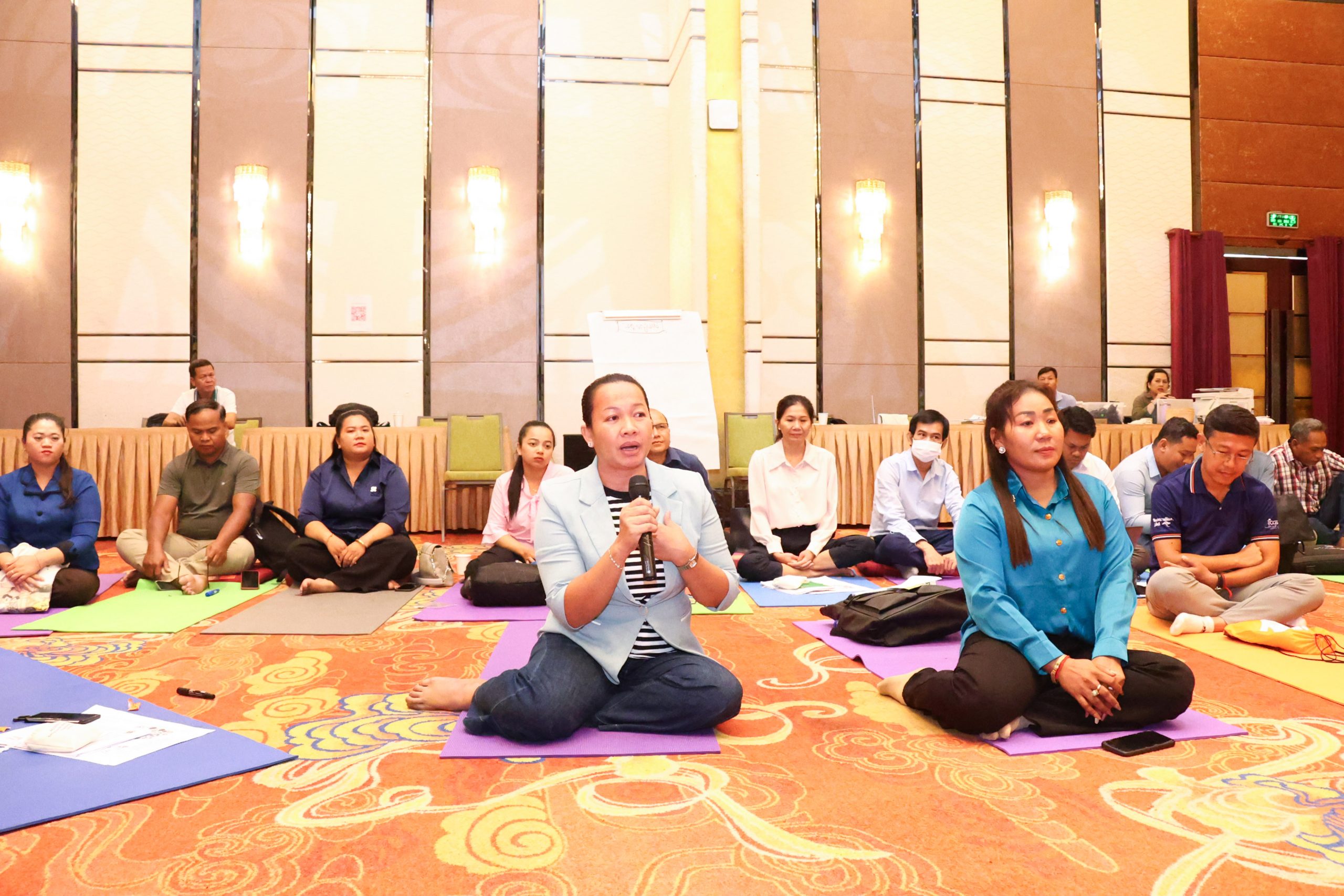
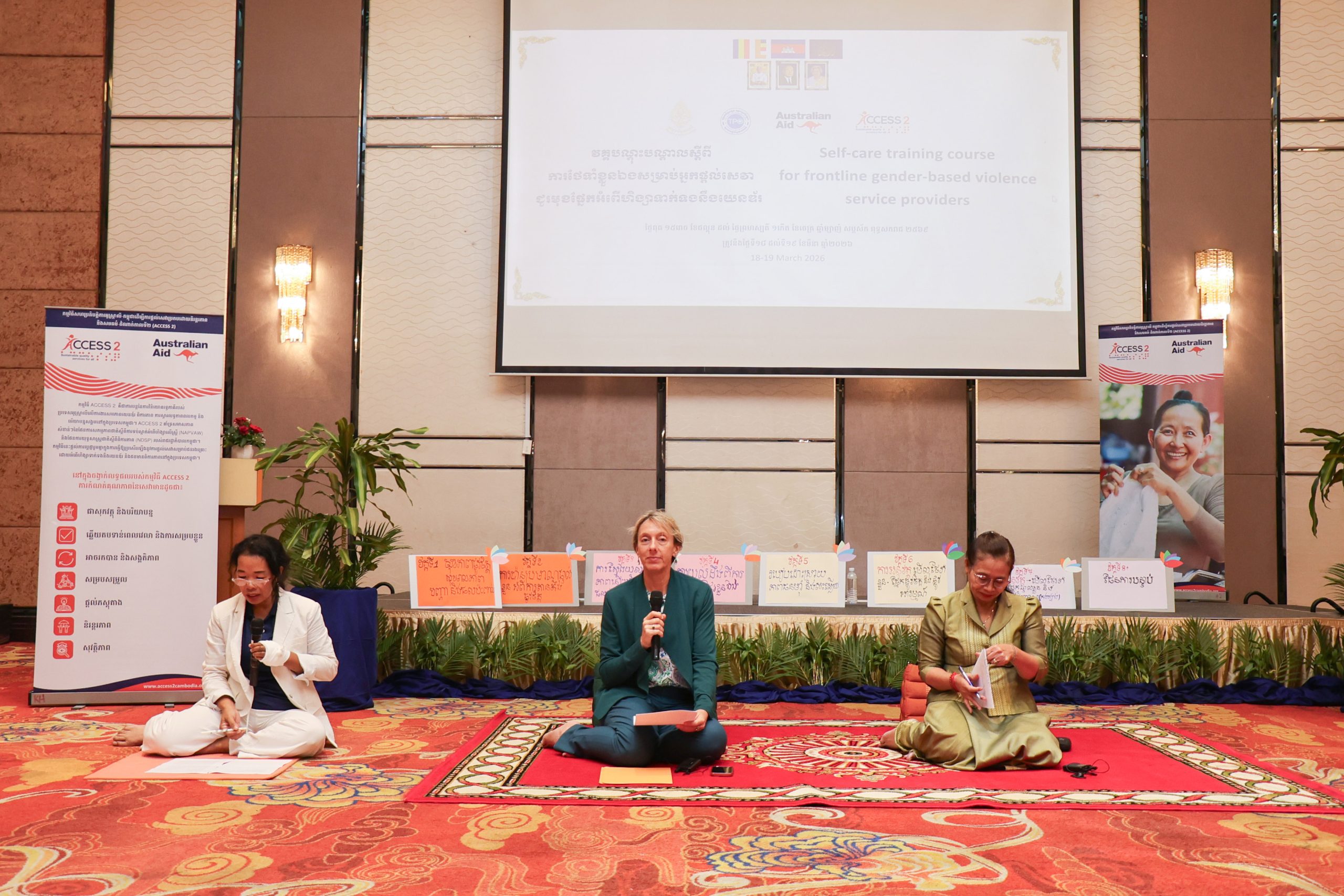 The training equipped participants with tools to assess their mental health, recognise stress and early signs of burnout, and understand how unmanaged emotional strain can affect the delivery of GBV services. It encouraged self‑reflection, peer exchange, and the sharing of practical, easy‑to‑apply self‑care practices. Participants learned simple techniques to integrate into their daily routines and identified strategies suited to their personal and professional contexts. The sessions also strengthened peer support networks and improved awareness of available psychosocial services. Using an active learning approach, the two‑day course encouraged participants to share experiences, practice self‑care exercises in small groups, and apply these methods to their work.
During the opening session, H.E. Nhean Sochetra, General Director of the Directorate of Social Development at MoWA, emphasised the importance of self‑care for frontline providers. She noted that service providers supporting survivors can also be deeply affected by the work, making personal wellbeing essential for effective and compassionate service delivery. She expressed appreciation to the ACCESS 2 program for organising this vital training.
Ms. Sean Chanthorn, Deputy Director of the Provincial Department of Women’s Affairs in Kampong Cham, also expressed her gratitude: “I appreciate ACCESS 2 for providing this important training for our service providers, as we often experience mental strain. This training has helped me gain knowledge to better support myself.”
Ms. Phorn Sokhem, Manager of Safe Shelter at the Cambodian Women’s Crisis Center, added: “I truly enjoyed participating in this training. These are essential skills for my work supporting GBV survivors in the shelter.”
In her remarks, Ms. Sophia Cason, Team Leader of the ACCESS 2 program, highlighted the importance of equipping participants with the ability to recognise mental health risks, apply practical self‑care strategies, and seek peer or professional support. She emphasised that these skills enhance professional resilience and strengthen support for survivors of GBV, persons with disabilities, and Indigenous communities.
She noted:
“I sincerely hope that the knowledge, skills, and commitments developed during this training will be carried forward into your workplaces, communities, and daily routines to promote sustainable wellbeing for service providers and strengthen the overall GBV response system.”
Through investments in improving the quality of GBV services, ACCESS 2 supports service providers to enhance their professional skills and promote healthier, more sustainable work environments—ultimately contributing to more inclusive and effective services for vulnerable communities.
ACCESS 2 is funded by the Australian Government and managed by Abt Global.